



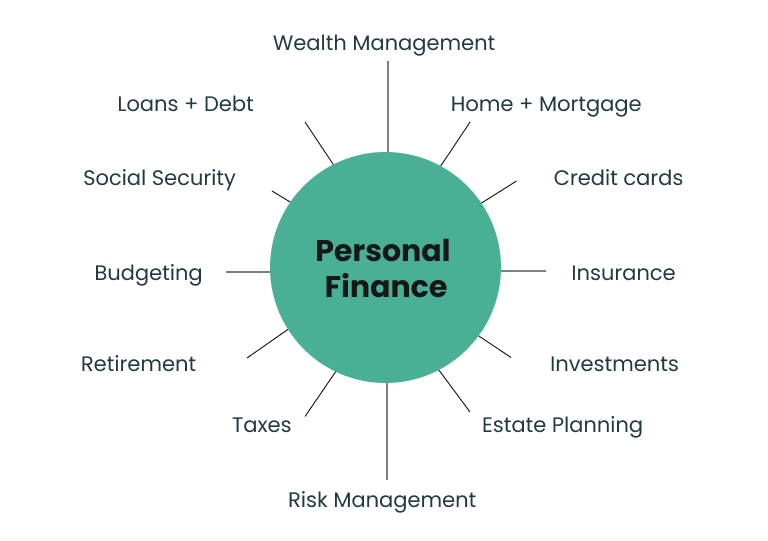
Personal finance describes the management of all aspects of your finances, both short-term and long-term. It also encompasses an entire industry devoted to the services and products that help individuals manage their finances and benefit from investment opportunities.
Why Is Personal Finance Important?
Personal finance involves your day-to-day financial needs and long-term financial goals. The sooner you understand personal finance, the better you can leverage your long-term financial prospects through areas like investing and retirement planning.

The right personal finance strategies can help you capitalize on opportunities and optimize your expenses to reach your financial goals.
What Are the Five Areas of Personal Finance?
Though there are several tenets of personal finance, they fit into five categories: income, spending, savings, investing and protection.

Income
Income is the foundation of your personal finances and includes all parts of your cash flow, or the money you receive from all sources.
This includes:
- Salary
- Pension
- Social Security
- Income from rental properties
- Investments

Spending
Spending involves the exchange of money for goods or services. Controlling the amount of money you spend can allow you to set aside more money to grow your portfolio.

Savings
Savings includes any money from your income that you do not spend but instead set aside for future use. It is critical to have savings to provide for potential expenses, whether they are planned or unplanned.

Investing
Investing is different from savings. While savings are what is put aside from your income, investments are purchases that you expect to give you a good rate of return. They.may provide future income or savings.
There are several types of investments, including:
However, it is important to remember that investments come with risk.

Protection
Protection from financial risks can be handled through a variety of financial products, including:
- Annuities
- Life insurance
- Health insurance
- Property/casualty insurance
These products can provide financial security or protection from unexpected financial costs.
What Are the Fundamental Principles of Personal Finance?
There are 12 basic principles of successful personal finance, according to the Jump$tart Coalition for Financial Literacy, a nonprofit organization promoting financial literacy in U.S. public schools.
These principles were originally designed to teach young students the basics of financial literacy and responsibility. However, they are also a useful tool for adults, helping to guide them toward better personal finance practices.
These principles hold up at any stage of life.
The 12 Principles of Personal Finance
Know your take home pay
Be confident in your income and payment stream before committing to any significant spending, such as credit card debt, car loans or a mortgage.
Pay yourself first
Set aside money from each paycheck for unexpected emergencies and long-term goals before paying your bills.
Start saving now
Ideally, you should start saving for your future while you’re still young. The longer you save, the more interest your savings will earn.
Compare interest rates
Whether it’s saving for your future or looking for the right credit card, look for the best interest rates to earn more interest on savings while paying less interest on debt.
Remember the Rule of 72
To figure out how many years it will take your savings to double, divide 72 by the interest rate of your savings.

Never borrow what you can’t repay
Make sure you are able to pay off what you owe. This will improve your credit overall and keep your debt manageable.

Create a budget
Create an annual budget of your income and expenses. Use this as a roadmap to build your savings while living within your means.

Remember that high returns mean high risks
A high return on investment (ROI) typically means you must assume greater risks.
Diversifying your investments and balancing asset allocation can spread that risk, protecting your portfolio.

Don’t expect something for nothing
Be wary of get-rich-quick schemes – if they were real, everyone would already be doing them.
Remember, if it sounds too good to be true, it probably is.

Plan your financial future
Take time to write down your financial goals, both short-term and long-term. Then, work out a realistic roadmap to get you to those goals.

Your credit past determines your credit future
Your credit record is kept for years by credit bureaus. If you have trouble paying loans or credit card debt, your record will hurt your chances of getting credit in the future.

Buy insurance
Health, auto, home and life insurance can protect you and your loved ones from financial hardship in the event of accidents or illness.
Let’s Talk About Your Financial Goals.
How to Become Better Educated in Personal Finance
There is a wealth of resources available online, from nonprofit organizations to state and local governments. These resources help promote financial literacy so you can achieve financial wellness in the future.
Both online and in-person classes are available, often for a fee, from for-profit organizations and educational institutions.
Resources for Learning About Personal Finance
- Check with your state education department or agency about personal finance classes near you.
- Contact your local community college, university or continuing education program.
- The U.S. Consumer Financial Protection Bureau offers tools and other resources ranging from credit cards to debt collection if you have specific questions about personal finance topics.
- Check your local library or bookstore for books on personal finance topics.
- Check with your employer’s human resources department about resources that may be available through your job or benefits programs.
- Talk to a licensed financial advisor or other professional about resources and financial products that can help you with personal finance.

Careers in the Personal Finance Industry
There were more than 275,000 personal financial advisors in the U.S. in 2020, according to the U.S. Bureau of Labor Statistics. That number is expected to grow by about five percent by 2030 and create 12,600 new roles.
Personal financial advisors focus on helping people manage their personal finances and plan their financial futures. They provide guidance on decisions about insurance or annuitiesAnnuityAn insurance product that earns interest and generates periodic payments over a specified period of time, typically with the purpose of providing income in retirement., what types of investments to pursue and how tax laws affect their finances.
Many sell financial products to clients.
Products Financial Advisors Sell
- Annuities
- Bonds
- Life insurance
- Mutual funds
- Stocks
Source: U.S. Bureau of Labor Statistics
To sell financial products, financial advisors must have a combination of licenses based on the particular type of investment products and advice they provide. They may be regulated by the state in which they do business, as well as the Securities and Exchange Commission (SEC), depending on the products they sell.
A personal financial advisor typically has a bachelor’s degree, though some may have a higher degree. Many positions may require professional certification or continuing education. Education, training and salaries are similar to several other financial professions.
Education, training and salaries are similar to several other financial professions.
Jobs Similar to Personal Financial Advisors
- Budget analysts. Budget analysts focus on the financial planning of public and private organizations.
- Financial analysts. Financial analysts help businesses and individuals plan spending to maximize profits.
- Financial managers. Financial managers create reports, develop plans, guide investment decisions and set long-term financial goals for their organization.
- Insurance agents. Insurance agents sell clients one or more types of insurance.
- Insurance underwriters evaluate insurance applications, estimate risk and decide if a policy should be approved for a client or under what terms.
- Real estate brokers and agents. Real estate brokers and agents help clients buy, sell or rent real estate property.
- Securities, commodities and financial services agents. Agents sell these financial products and provide financial services for buyers and sellers in different financial markets.
Private bankers and wealth managers are closely related to personal financial advisors, but their clients tend to have much larger amounts of money to invest and manage. Their clients may be closer in financial scale to companies or large organizations than individuals.
Join Thousands of Other Personal Finance Enthusiasts

 Join Thousands of Personal Finance Enthusiasts