

To say the economic landscape has been unpredictable lately is to put it mildly. Geopolitical tensions have renewed inflation fears, with the war in Iran sending oil prices skyrocketing.
Inflation is still sticky, with March’s Consumer Price Index (CPI) rising 0.9%, pushing the annual inflation rate to 3.3%.
“The first inflation data from after the war in Iran confirmed what everyone was worried about – the oil shock contributed to an extremely high headline CPI number of 0.9% month-over-month,” said Chris Zaccarelli, chief investment officer for Northlight Asset Management.
On top of that, while the 30-year fixed-rate mortgage decreased to 6.30% as of April 16, it remains much higher than it was just a few years ago, making homeownership a difficult journey for many Americans.
To put this in perspective, it stood at 5% in the corresponding week of 2022, and 3.13% in the corresponding week of 2021, according to Freddie Mac data.
Against this backdrop, people are wondering what it all means for their retirement savings and for 401(k)s and IRAs.
How Market Volatility Is Affecting 401(k)s and IRAs
Melissa Caro, CFP, and founder of My Retirement Network, said the current environment feels unpredictable because it is: Rates moved fast, inflation hasn’t settled cleanly, and markets are reacting to expectations that keep shifting. “That creates noise, and most people don’t know what to do with it,” Caro said.
But Caro argued that the biggest risk right now isn’t market volatility, it’s how people are interpreting it.
“Retirement accounts are built to play out over decades, but people are reacting to what happened this week. That disconnect is where mistakes happen,” she said, adding that if someone is close to retirement or already taking withdrawals, timing matters more, as losses hit differently when you don’t have years to recover.
But for everyone else, she noted that the bigger issue is behavioral: changing course based on headlines instead of sticking to a plan that was built for this kind of environment.
“I also see a lot of people sitting in default investments like target-date funds without really understanding what they own or how those allocations shift over time. That’s fine—until it isn’t. If you don’t know what you’re invested in, you’re more likely to react at the wrong time,” she added.
Shelby Rothman, CFP and founder at EnJoy Financial, echoed the sentiment, saying that while market volatility can cause retirement savers to feel anxious about their financial future, those with 401(k)s or IRAs “should monitor their own emotions.”
“The majority of investors, particularly younger savers, will be able to ride this storm and come out on the other end with their retirement savings intact – if they stay the course,” she said.
As she explained, the stock market has historically continued to increase in value long-term, but it can be tempting to pull out of the market or slow down your contributions when stocks dip.
“This is a bad choice, and it’s important to remember that time in the market is more important than trying to time the market,” she added.
Of course, she said the biggest risk remains for near-retirees and current retirees who need to access their money soon, as this group has a short time horizon and needs to protect their nest eggs from market volatility.
“If the market continues to experience a prolonged stretch of volatility, retirees who aren’t diversified or protected against risk for their current age could face challenges,” Rothman said.
What Experts Say to Do With Your Retirement Savings Now
With markets fluctuating and economic signals sending mixed messages, financial advisors say the key is focusing on what you can control. While no one can predict short-term market movements, there are practical steps investors can take to protect their long-term retirement strategy and avoid costly mistakes driven by emotion.
Don’t Panic Sell
Jay Zigmont, PhD, CFP, founder of Childfree Trust, said if you are not looking to retire in the next couple of years, then the market going up and down has no impact on you. And just because the market is down doesn’t mean you should sell.
“You need a plan of what you are going to sell, if you are going to sell, and then what you will buy next,” Zigmont said.
Consider a Roth Conversion
Zigmont said that if you planned on doing a Roth conversion, it might be a good time.
“You can sell in your Traditional IRA, convert it to your Roth, and then buy back in. Effectively, you are converting a larger percentage of your Traditional IRA in this way,” he added.
Rebalance Your Portfolio if Needed
“We don’t regularly rebalance, but if your portfolio is now skewed away from what you want (i.e. the stock/bond ratio is off), it tends to be best to rebalance when the market is down,” Zigmont said, adding that if you don’t have International equity exposure, it is a good time to get some exposure when you rebalance.
Increase Your 401(k) Contributions Gradually
Cody Schuiteboer, president and CEO of Best Interest Financial, said one piece of advice he gives his clients, no matter the situation, is to increase their 401(k) contributions by 1% each year.
“An additional percentage point from a $70,000 annual income amounts to $700, which is affordable for any family,” he said. “Over a 20-year period, assuming a 7% average annual return, that single 1% increase compounds into more than $36,000 in extra retirement savings, and it costs less per month than many streaming services.”
Consider Annuities for Stability
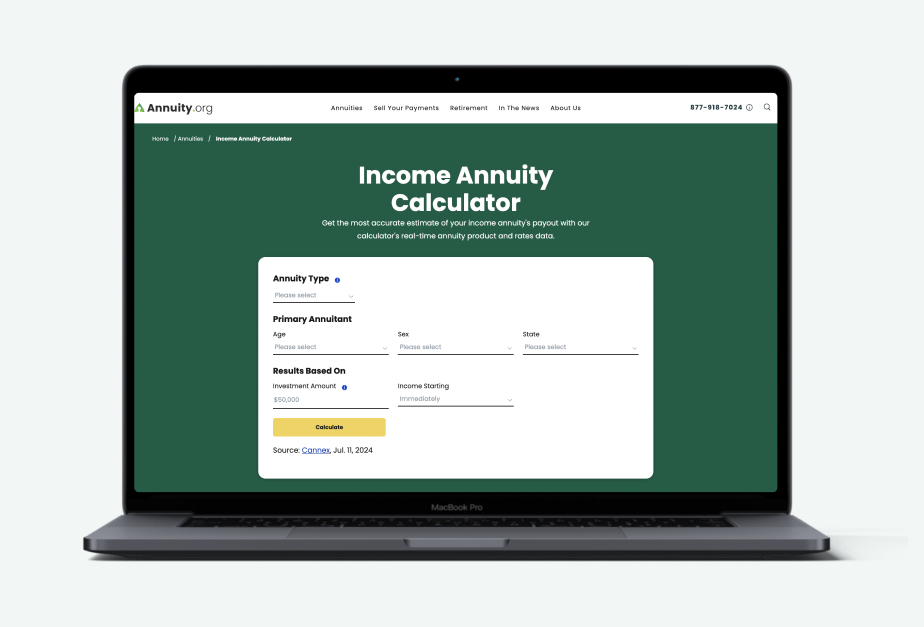
In uncertain markets, some experts say annuities can help add stability to a retirement plan. Certain types, like fixed and fixed index annuities, offer principal protection and can provide a predictable income stream.
This can be especially helpful for those nearing retirement who may need to protect a portion of their savings from market swings. However, advisors note that annuities vary in cost and complexity, so it’s important to understand how they fit into your overall financial plan.

See What Today’s Rates Mean For You
Build (or Strengthen) Your Emergency Fund
Experts recommend that emergency funds amount to three to six months of living expenses.
Alex Langan, CIO and financial advisor at Langan Financial Group, stressed that it’s important to build one before you need it.
“People without liquid savings are the ones who end up raiding their 401(k) early, paying the 10% penalty plus taxes to do it. A cash cushion protects your retirement account from becoming your emergency fund,” Langan said.
Stick With Consistent Investing
Bobbi Rebell, CFP, consumer finance expert at CardRates.com, said that in most plans, investors are dollar-cost averaging by taking money out of each paycheck and investing it.
“That means that if the market goes down, you are getting to buy the same stocks, but at a lower entry price. That’s a good thing. We tend to “anchor” an investment, like a stock, at the most recent high point,” she said, adding that it can skew our judgment and make us feel like we have lost value in our account.
In turn, Rebell said it’s important to avoid that kind of linear thinking.
“Keep contributing whether the market goes up or down. Steady wins the race. If you are feeling skittish, it may be time to rethink your asset allocation and make sure it fits your timeline,” she said.
Take a Holistic View of Your Finances
My Retirement Network’s Caro said that people tend to look at their 401(k) or IRA in isolation, and that’s part of the issue.
“Those accounts don’t exist on their own. They’re tied to income, spending, debt, healthcare costs, and a series of decisions that all interact with each other,” she said, noting that when those pieces aren’t aligned, even a solid portfolio can feel like it’s not working.
“The better question isn’t “What is the market doing?” It’s “Does my plan still hold together if things don’t go exactly as expected?” she added.