

This feeling is far more common than most people realize, and it’s not necessarily an indication of financial weakness. Rather, it’s evidence that retirement is as much a psychological transition as an economic one. After spending decades doing everything that you’re supposed to – saving consistently, avoiding lifestyle creep and investing for the long term – shifting to spend-down mode can be nerve-wracking.
Overcoming this very real fear entails taking a close look at your finances and revisiting the various aspects of your retirement plan that exist to bolster the longevity of your savings. Your financial advisor should facilitate this exercise, and he or she should make it highly interactive.
Read on to learn more about how you can gain more confidence in your retirement plan.
Why Can the Numbers Say YES, but Your Brain Says NO?
On paper, your retirement plan could be quite strong. It might reflect solid investment performance projections, resilient cash flows and a nest egg that’s expected to stretch past life expectancy.
However, your brain doesn’t respond to tables and trajectory graphs. It responds to uncertainty. Regardless of how much you’ve saved, it’s natural to worry about unexpected developments eroding your nest egg.
For most of your adult life, your finances probably worked as follows: money was earned via work, bills were paid, savings gradually accumulated and unexpected outlays, while frustrating, were manageable (because future paychecks were anticipated). Retirement flips the script. Suddenly, instead of continuing to slowly build your nest egg, it’s time to live off it.
For most of us, this shift feels uncomfortable, even if a sound retirement plan is in place. The result is a wave of unsettling questions, such as the following:
- What if the market crashes right after we retire?
- What if one of us needs long-term care?
- What if inflation keeps rising?
- What if we live to 95?
- What if our advisor is wrong?
These are rational fears. They’re the natural result of moving from the accumulation phase to the decumulation phase of your retirement plan. This is a big transition and navigating through it requires a fundamental shift in mindset and risk management.
How Can I Get More Comfortable with My Retirement Plan?
Ironically, the people who typically struggle most with making the transition to retirement are those that exhibit great fiscal discipline. For decades, these individuals have conditioned themselves to delay gratification, conserve resources and plan for the future. Now they’re told it’s time to chill out and spend their money. Doing so is nowhere near as easy as it sounds.
If this sounds familiar, you’re probably wondering what it’s going to take to be able to relax and embrace this phase of life. The key is gaining confidence in your retirement plan. You need to get closer to it and gain appreciation for the aspects of it designed to weather setbacks.
Leverage your financial advisor to bridge the confidence gap. Express your concerns, and tell him or her you need a clear roadmap that feels practical, not theoretical. A competent advisor will explain how a well-constructed retirement plan does more than generate income — it reduces uncertainty. Typically, this unfolds via a rich dialogue around each of the plan components described below.
- Disciplined Budget
The key to a successful retirement is ensuring you can replace the income you earned during your working years with nest egg drawdowns during your retirement years. The starting point is your budget, which is reflective of non-discretionary spend (e.g., housing costs, healthcare, groceries, etc.) and discretionary spend (e.g., vacation travel, entertainment, dining out, etc.).
Given your anxiety about retirement, you need to focus on the non-discretionary portion of your budget. This is the portion of spend where you have little to no flexibility. For many couples, identifying this number is surprisingly calming. It translates retirement living from an abstract fear to a measurable monthly target.
- Reliable Sources of Income
Once non-discretionary spend has been quantified, the next step is identifying reliable sources of income that will partially or entirely fund it. This is where retirement confidence often increases dramatically. Once you know essential expenses will be covered (partially or entirely) by stable sources of income, market volatility and other economic risks become much less emotionally threatening.
Reliable sources of income vary from one person to the next, but they generally include some combination of Social Security benefits, pensions, fixed income investments and annuities. The first three sources are fairly well-understood. Annuities are lesser-known, but they play a fundamental role in many retirement plans.
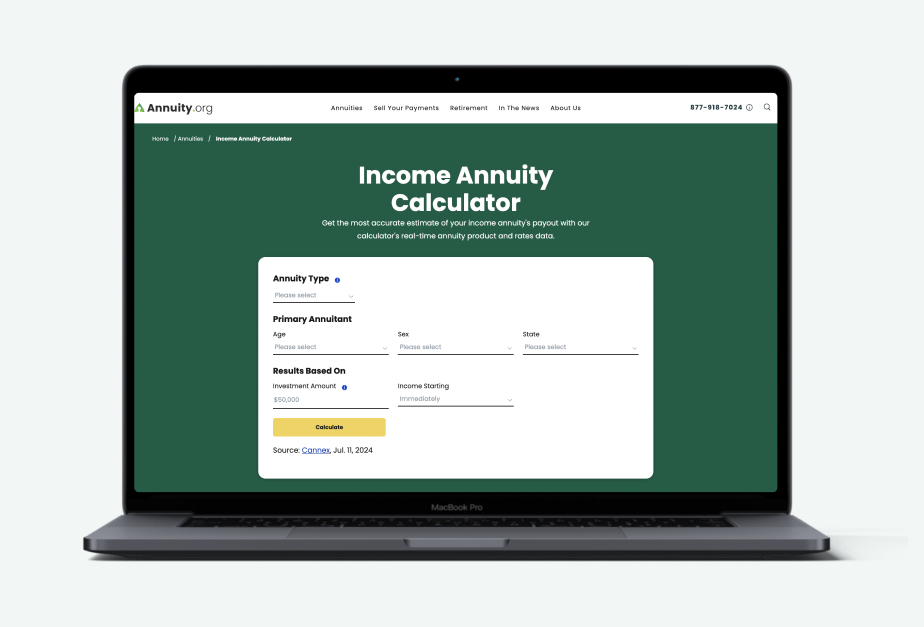
Annuities are customizable financial contracts issued by insurance providers. Essentially, they provide a retiree a stable stream of payments in exchange for an upfront investment. They make the most sense for conservative, hands-off investors that want to generate consistent, guaranteed income for life.
Many people think they’re afraid of retirement, but what they’re actually afraid of is losing a paycheck that covers essential outlays. This fear can be alleviated once you realize that Social Security benefits, pension streams and annuity distributions are all examples of “retirement paychecks.”
- Adequate Cash Reserve
While reliable sources of income may partially or entirely fund your day-to-day living expenses, unexpected cash outlays are an inevitable part of life. As a result, ensuring your retirement portfolio reflects an adequate amount of liquidity is critical.
The best way to do this is to maintain six to twelve months of living expenses in a high-yield savings account or money market mutual fund (the most competitive of which are currently yielding around 3.75% annually). This increases your sense of security, generates some extra investment income and ensures you won’t ever be forced to liquidate other assets in your retirement portfolio at inopportune times.
- Investment Growth Engine
As noted above, many retirees utilize fixed income investments and annuities to generate reliable sources of income. These are valuable assets, but unless you have several millions of dollars saved, they shouldn’t constitute your entire investment portfolio.
To combat inflation and bolster the longevity of your savings, you need to incorporate a robust growth engine into your portfolio. This usually takes the form of low-cost and globally diversified stock funds. Generally, these holdings should represent a majority of your total portfolio.
- Scenario Stress Tests
The best way to showcase the resiliency of your retirement plan is to run it through various probability-weighted scenarios and contemplate the actions you may need to take under each. At a minimum, this includes a baseline scenario, a best-case scenario and a worst-case scenario. The baseline scenario should reflect how things are expected to play out, while the other two scenarios should exhibit optimal and suboptimal conditions. For anxious retirees, if the worst-case scenario (which is often highly improbable) is manageable, this can be very reassuring.
Entering retirement can be incredibly stressful. The good news is that many retirees report the same thing – the months leading up to retirement were much more stressful than retirement itself. Why? Uncertainty is typically more unsettling than reality.
Closing thoughts
If you’re feeling nervous about retirement, it doesn’t mean you’re unprepared. Rather, it often means you understand that retirement is one of life’s biggest financial transitions – and you care deeply about getting it right. To move ahead confidently, you just need a stronger sense of security.
Your financial advisor should facilitate the transition by reassuring you about the strength of your retirement plan. Specifically, he or she should highlight the various aspects of your plan that are designed to bolster the resiliency of your savings. Additionally, he or she should give you clear visibility into how your nest egg could be impacted under various probability-weighted scenarios and discuss the actions you might need to take under each.
With deeper understanding and awareness, confidence increases and anxiety-induced questions decrease. In their place, resourceful considerations, such as “We’re traveling more this summer; maybe we should increase our cash reserve” or “Let’s check with our advisor to see how much the decline in interest rates is going to impact our monthly income stream,” emerge. This is when retirement stops feeling like a cliff and starts feeling like a well-planned, achievable transition.