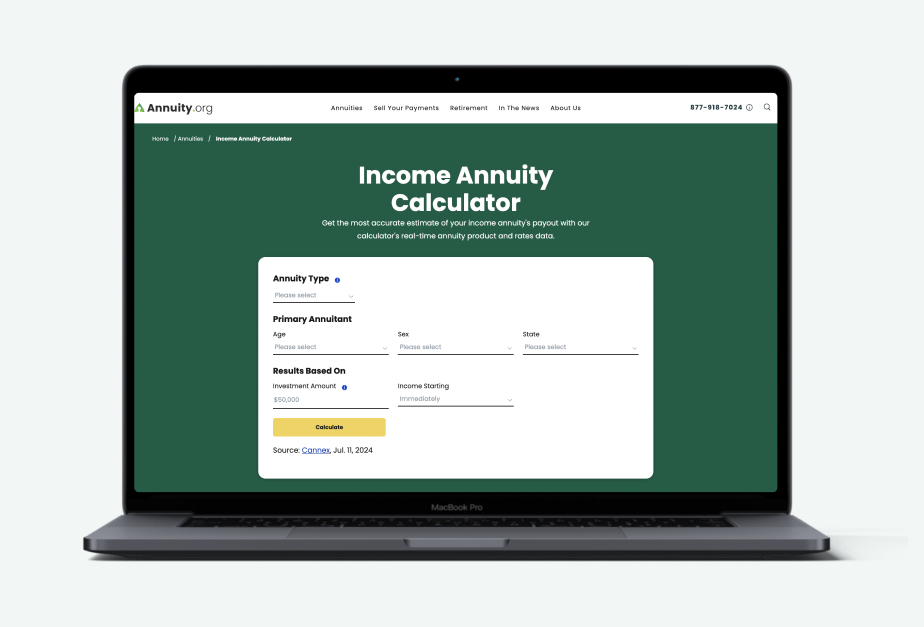
Current indexed annuity rates show how much potential growth you can earn while protecting your principal from market losses.
Unlike fixed annuities, indexed annuities don’t pay a single guaranteed interest rate. Instead, returns are tied to a market index and limited by features like caps, participation rates, or spreads.
Below, you’ll find how indexed annuity rates work, what today’s rates look like, and how to compare them to fixed annuity rates when deciding which option fits your retirement plan.
Today’s Best Indexed Annuity Rates at a Glance
| TERM | CARRIER | CAP RATE | AM BEST RATING | BONUS | MINIMUM PREMIUM |
|---|---|---|---|---|---|
| 3 Year | United of Omaha Insurance Company (a Mutual of Omaha company) | 9.50% | A+ | – | – |
| 5 Year | Minnesota Life Insurance Company – A Securian Co. | 11.70% | A+ | – | $100,000 |
| 6 Year | Revol One Insurance Company | 9.00% | B++ | – | – |
| 7 Year | Symetra Life Insurance Company | 12.00% | A | – | $100,000 |
| 8 Year | Midland National Life Insurance Company | 9.70% | A+ | – | $75,000 |
| 9 Year | Pacific Life Insurance Company | 10.85% | A+ | $100,000 | |
| 10 Year | Sagicor Life Insurance Company | 11.50% | A | – | $75,000 |
| 12 Year | North American Company for Life and Health Insurance | 9.00% | A+ | – | – |
| 14 Year | SILAC Insurance Company | 10.25% | B+ | +24% | – |
| 15 Year | Athene Annuity and Life Company | 7.00% | A+ | +28% | – |
- Two increases, and nothing went down. Symetra Life (A) took the 7-year at 12.00%, up from 11.70% (+30 bps). Sagicor Life (A) took the 10-year at 11.50%, up from 11.00% (+50 bps). The other eight terms didn’t change. The average cap rose from 9.97% to 10.05%.
- New top rate, with stronger credit. Symetra’s 7-year is now the highest on the board at 12.00%, ahead of Minnesota Life’s 11.70% 5-year. Sagicor (A) replaces American Life & Security (B++) on the 10-year. That brings terms rated A or better from 7 to 8, but the 10-year no longer has a bonus (it was +22%).
- Slightly wider range. Caps now run from 7.00% to 12.00%, a 500 bps spread (up from 470 bps). Athene’s 15-year is still the lowest and still has the largest bonus (+28%).
Fixed index annuity cap rates show the maximum return you can earn in a strong market year — not a guaranteed rate. Comparing indexed annuities to fixed annuities can help you decide whether growth potential or guaranteed returns matter more for your goals.
Fixed Index vs Fixed Annuities
| If you care most about… | Fixed Annuity | Fixed Index Annuity |
|---|---|---|
| Guaranteed returns | Yes | No |
| Protection from losses | Yes | Yes |
| Growth potential | Limited | Higher potential |
| Predictability | Very high | Moderate |
| Simplicity | Simple | More complex |
Comparing Today’s Fixed Index Annuity Rates
Not sure which fixed index annuity is right for you? Use the comparison table below to weigh your options. Sort by term length to match the time you’re comfortable committing your money, or sort by cap rate—the maximum interest a product can credit in a given period—to spot the most competitive offers. The rates featured above represent today’s top picks, while the table gives you the full picture so you can compare on your own terms.
All fixed index annuity cap rates
Updated October 20, 2026 · Source: Cannex
| Term | Carrier | Cap rate | AM Best | Bonus | Min premium |
|---|---|---|---|---|---|
| 3 yr | United of Omaha Insurance Company (a Mutual of Omaha company) | 9.50% | A+ | — | — |
| 3 yr | Security Benefit Life Insurance Company | 8.75% | A- | — | — |
| 3 yr | MassMutual Ascend Life Insurance Company | 8.00% | A++ | — | — |
| 3 yr | Oceanview Life and Annuity Company | 7.00% | A | — | — |
| 4 yr | United of Omaha Insurance Company (a Mutual of Omaha company) | 9.50% | A+ | — | — |
| 5 yr | Minnesota Life Insurance Company - A Securian Co. | 11.70% | A+ | — | $100,000 |
| 5 yr | Sagicor Life Insurance Company | 11.50% | A | — | $75,000 |
| 5 yr | Symetra Life Insurance Company | 11.50% | A | — | $100,000 |
| 5 yr | Pacific Life Insurance Company | 11.25% | A+ | — | $100,000 |
| 5 yr | American National Insurance Company | 11.00% | A | — | — |
| 5 yr | Eagle Life Insurance Company | 11.00% | A | — | — |
| 5 yr | Fidelity and Guaranty | 11.00% | A | — | — |
| 5 yr | Global Atlantic - Forethought Life Insurance Company | 11.00% | A | — | $100,000 |
| 5 yr | Lincoln Financial | 11.00% | A | — | $100,000 |
| 5 yr | Prudential Financial | 11.00% | A+ | — | $100,000 |
| 5 yr | Revol One Insurance Company | 11.00% | B++ | — | — |
| 5 yr | Allianz Life Insurance Company of North America | 10.75% | A+ | — | $100,000 |
| 5 yr | Axonic Insurance Services | 10.75% | A- | +26.00% | $100,000 |
| 5 yr | Reliance Standard Life Insurance Company | 10.75% | A++ | — | — |
| 5 yr | Security Benefit Life Insurance Company | 10.75% | A- | +1.00% | — |
| 5 yr | Talcott Financial Group | 10.75% | A- | — | $100,000 |
| 5 yr | Aspida Life Insurance Company | 10.60% | A- | +17.50% | $100,000 |
| 5 yr | Corebridge Financial | 10.50% | A | — | $100,000 |
| 5 yr | United of Omaha Insurance Company (a Mutual of Omaha company) | 10.50% | A+ | — | — |
| 5 yr | Athene Annuity and Life Company | 10.25% | A+ | — | $100,000 |
| 5 yr | AuguStar Financial | 10.25% | A | — | — |
| 5 yr | Delaware Life | 10.25% | A- | — | $100,000 |
| 5 yr | MassMutual Ascend Life Insurance Company | 10.25% | A++ | — | $100,000 |
| 5 yr | Midland National Life Insurance Company | 10.00% | A+ | — | — |
| 5 yr | New York Life Insurance and Annuity Corporation (NYLIAC) | 10.00% | A++ | — | $100,000 |
| 5 yr | Protective Life Insurance Company | 10.00% | A+ | — | $100,000 |
| 5 yr | S.USA Life Insurance Company Inc. | 10.00% | A- | +17.50% | — |
| 5 yr | Knighthead Life | 9.75% | A- | +20.00% | $100,000 |
| 5 yr | North American Company for Life and Health Insurance | 9.65% | A+ | — | — |
| 5 yr | EquiTrust Life Insurance Company | 9.50% | B++ | — | — |
| 5 yr | Integrity Life Insurance Company (W&S) | 9.50% | A+ | — | — |
| 5 yr | Farmers Life Insurance Company | 9.25% | B++ | +18.00% | — |
| 5 yr | The Standard | 9.25% | A | +6.00% | — |
| 5 yr | Nationwide Life Insurance Company | 9.00% | A+ | — | $100,000 |
| 5 yr | Jackson National Life Insurance | 8.80% | A | — | $100,000 |
| 5 yr | American Equity Investment Life Insurance Company | 8.50% | A | +10.00% | — |
| 5 yr | SILAC Insurance Company | 8.50% | B+ | +10.50% | — |
| 5 yr | Oceanview Life and Annuity Company | 8.40% | A | — | — |
| 5 yr | Atlantic Coast Life | 5.95% | B | — | — |
| 5 yr | Sentinel Security Life | 5.95% | C+ | — | — |
| 6 yr | Revol One Insurance Company | 9.00% | B++ | — | — |
| 6 yr | Americo Financial Life and Annuity Insurance Company | 8.80% | A | — | — |
| 7 yr | Symetra Life Insurance Company | 12.00% | A | — | $100,000 |
| 7 yr | Minnesota Life Insurance Company - A Securian Co. | 11.70% | A+ | — | — |
| 7 yr | Sagicor Life Insurance Company | 11.50% | A | — | $75,000 |
| 7 yr | Pacific Life Insurance Company | 11.30% | A+ | — | $100,000 |
| 7 yr | Global Atlantic - Forethought Life Insurance Company | 11.25% | A | — | $100,000 |
| 7 yr | Lincoln Financial | 11.25% | A | — | — |
| 7 yr | Prudential Financial | 11.05% | A+ | — | — |
| 7 yr | American National Insurance Company | 11.00% | A | +12.00% | — |
| 7 yr | Aspida Life Insurance Company | 11.00% | A- | — | — |
| 7 yr | Eagle Life Insurance Company | 11.00% | A | — | — |
| 7 yr | Fidelity and Guaranty | 11.00% | A | +7.00% | — |
| 7 yr | Reliance Standard Life Insurance Company | 11.00% | A++ | — | — |
| 7 yr | Revol One Insurance Company | 11.00% | B++ | — | — |
| 7 yr | Security Benefit Life Insurance Company | 11.00% | A- | +1.00% | — |
| 7 yr | Talcott Financial Group | 11.00% | A- | — | $100,000 |
| 7 yr | Axonic Insurance Services | 10.75% | A- | +26.00% | $100,000 |
| 7 yr | MassMutual Ascend Life Insurance Company | 10.75% | A++ | — | — |
| 7 yr | Corebridge Financial | 10.50% | A | — | $100,000 |
| 7 yr | Delaware Life | 10.50% | A- | — | $100,000 |
| 7 yr | United of Omaha Insurance Company (a Mutual of Omaha company) | 10.50% | A+ | — | — |
| 7 yr | Athene Annuity and Life Company | 10.25% | A+ | +6.00% | — |
| 7 yr | Midland National Life Insurance Company | 10.15% | A+ | — | $100,000 |
| 7 yr | AuguStar Financial | 10.00% | A | +5.00% | — |
| 7 yr | EquiTrust Life Insurance Company | 10.00% | B++ | — | — |
| 7 yr | Knighthead Life | 10.00% | A- | +20.00% | $100,000 |
| 7 yr | New York Life Insurance and Annuity Corporation (NYLIAC) | 10.00% | A++ | — | $100,000 |
| 7 yr | Protective Life Insurance Company | 10.00% | A+ | — | $100,000 |
| 7 yr | S.USA Life Insurance Company Inc. | 10.00% | A- | +17.50% | — |
| 7 yr | Allianz Life Insurance Company of North America | 9.75% | A+ | — | — |
| 7 yr | Clear Spring Life and Annuity Company | 9.75% | A- | — | — |
| 7 yr | Nationwide Life Insurance Company | 9.75% | A+ | — | $100,000 |
| 7 yr | The Standard | 9.75% | A | — | — |
| 7 yr | American Life & Security Corp | 9.50% | B++ | +16.00% | — |
| 7 yr | Farmers Life Insurance Company | 9.50% | B++ | +18.00% | — |
| 7 yr | Integrity Life Insurance Company (W&S) | 9.50% | A+ | — | — |
| 7 yr | The Lafayette Life Insurance Company | 9.50% | A+ | — | — |
| 7 yr | North American Company for Life and Health Insurance | 9.30% | A+ | — | — |
| 7 yr | American Equity Investment Life Insurance Company | 9.25% | A | — | — |
| 7 yr | Nassau Life and Annuity Company | 9.25% | B++ | — | — |
| 7 yr | SILAC Insurance Company | 9.00% | B+ | +15.00% | — |
| 7 yr | Americo Financial Life and Annuity Insurance Company | 8.95% | A | — | — |
| 7 yr | Jackson National Life Insurance | 8.90% | A | — | — |
| 7 yr | Oceanview Life and Annuity Company | 8.50% | A | — | — |
| 7 yr | Atlantic Coast Life | 5.95% | B | — | — |
| 7 yr | Sentinel Security Life | 5.95% | C+ | — | — |
| 8 yr | Midland National Life Insurance Company | 9.70% | A+ | — | $75,000 |
| 8 yr | North American Company for Life and Health Insurance | 8.90% | A+ | — | — |
| 9 yr | Pacific Life Insurance Company | 11.35% | A+ | — | $100,000 |
| 9 yr | Nassau Life and Annuity Company | 11.00% | B++ | +10.00% | — |
| 9 yr | Lincoln Financial | 10.25% | A | — | $100,000 |
| 9 yr | S.USA Life Insurance Company Inc. | 10.25% | A- | — | $100,000 |
| 9 yr | AuguStar Financial | 9.75% | A | +13.00% | — |
| 9 yr | American Equity Investment Life Insurance Company | 9.50% | A | +17.00% | — |
| 9 yr | Minnesota Life Insurance Company - A Securian Co. | 7.90% | A+ | — | — |
| 9 yr | Jackson National Life Insurance | 7.50% | A | — | $100,000 |
| 9 yr | Eagle Life Insurance Company | 5.75% | A | — | — |
| 9 yr | Atlantic Coast Life | 4.10% | B | — | — |
| 9 yr | Sentinel Security Life | 4.10% | C+ | — | — |
| 10 yr | Sagicor Life Insurance Company | 11.50% | A | — | $75,000 |
| 10 yr | Pacific Life Insurance Company | 11.35% | A+ | — | $100,000 |
| 10 yr | American Life & Security Corp | 11.00% | B++ | +22.00% | — |
| 10 yr | Global Atlantic - Forethought Life Insurance Company | 11.00% | A | +14.00% | $100,000 |
| 10 yr | Nassau Life and Annuity Company | 11.00% | B++ | +21.00% | — |
| 10 yr | Reliance Standard Life Insurance Company | 11.00% | A++ | — | — |
| 10 yr | Talcott Financial Group | 11.00% | A- | +21.00% | — |
| 10 yr | Aspida Life Insurance Company | 10.75% | A- | +17.50% | — |
| 10 yr | Axonic Insurance Services | 10.75% | A- | +26.00% | $100,000 |
| 10 yr | Lincoln Financial | 10.75% | A | — | — |
| 10 yr | Revol One Insurance Company | 10.75% | B++ | +22.00% | — |
| 10 yr | Midland National Life Insurance Company | 10.60% | A+ | +17.00% | — |
| 10 yr | Athene Annuity and Life Company | 10.50% | A+ | +25.00% | — |
| 10 yr | Corebridge Financial | 10.50% | A | — | $100,000 |
| 10 yr | Delaware Life | 10.50% | A- | +26.00% | $100,000 |
| 10 yr | EquiTrust Life Insurance Company | 10.50% | B++ | +11.00% | — |
| 10 yr | Fidelity and Guaranty | 10.50% | A | +21.00% | — |
| 10 yr | Security Benefit Life Insurance Company | 10.50% | A- | +23.00% | — |
| 10 yr | United of Omaha Insurance Company (a Mutual of Omaha company) | 10.50% | A+ | — | — |
| 10 yr | Knighthead Life | 10.25% | A- | +20.00% | $100,000 |
| 10 yr | Prudential Financial | 10.25% | A+ | — | — |
| 10 yr | S.USA Life Insurance Company Inc. | 10.25% | A- | +17.50% | — |
| 10 yr | North American Company for Life and Health Insurance | 10.10% | A+ | +24.00% | — |
| 10 yr | AuguStar Financial | 10.00% | A | +33.00% | — |
| 10 yr | Clear Spring Life and Annuity Company | 10.00% | A- | +10.00% | — |
| 10 yr | SILAC Insurance Company | 10.00% | B+ | +23.00% | — |
| 10 yr | The Standard | 10.00% | A | +12.00% | — |
| 10 yr | Protective Life Insurance Company | 9.90% | A+ | — | $100,000 |
| 10 yr | Farmers Life Insurance Company | 9.75% | B++ | +18.00% | — |
| 10 yr | American Equity Investment Life Insurance Company | 9.50% | A | +24.00% | — |
| 10 yr | Brighthouse Financial | 9.50% | A | — | $100,000 |
| 10 yr | Integrity Life Insurance Company (W&S) | 9.50% | A+ | — | — |
| 10 yr | The Lafayette Life Insurance Company | 9.50% | A+ | — | — |
| 10 yr | Allianz Life Insurance Company of North America | 9.25% | A+ | +15.00% | — |
| 10 yr | Americo Financial Life and Annuity Insurance Company | 9.00% | A | +12.00% | — |
| 10 yr | Oceanview Life and Annuity Company | 8.50% | A | — | — |
| 10 yr | MassMutual Ascend Life Insurance Company | 8.00% | A++ | — | — |
| 10 yr | Sentinel Security Life | 8.00% | C+ | +20.00% | — |
| 10 yr | Minnesota Life Insurance Company - A Securian Co. | 7.90% | A+ | — | — |
| 10 yr | Jackson National Life Insurance | 7.50% | A | — | — |
| 10 yr | American National Insurance Company | 7.20% | A | +1.00% | — |
| 10 yr | Nationwide Life Insurance Company | 6.25% | A+ | — | $100,000 |
| 10 yr | Atlantic Coast Life | 5.95% | B | — | — |
| 10 yr | Eagle Life Insurance Company | 5.75% | A | — | — |
| 10 yr | Symetra Life Insurance Company | 5.00% | A | — | — |
| 12 yr | North American Company for Life and Health Insurance | 9.00% | A+ | — | — |
| 14 yr | SILAC Insurance Company | 10.25% | B+ | +24.00% | — |
| 14 yr | Fidelity and Guaranty | 9.50% | A | +14.00% | — |
| 14 yr | EquiTrust Life Insurance Company | 6.50% | B++ | +15.00% | — |
| 14 yr | North American Company for Life and Health Insurance | 6.50% | A+ | +19.00% | $75,000 |
| 14 yr | S.USA Life Insurance Company Inc. | 4.75% | A- | +8.00% | — |
| 15 yr | Athene Annuity and Life Company | 7.00% | A+ | +28.00% | — |
All available cap rates per Cannex. AM Best color-coding: green = Superior (A+/A++), gray = Excellent (A/A-), red = Good (B+/B++). Rates vary by state, premium band and rider selection.
What Is an Indexed Annuity Rate?
An indexed annuity rate describes how interest is credited to your annuity based on the performance of a market index, such as the S&P 500.
Instead of earning the full index return, your growth is calculated using predefined limits. This allows insurers to offer market-linked upside while guaranteeing you won’t lose money due to market declines.
Most indexed annuities use some combination of:
- Cap rates (maximum return)
- Participation rates (percentage of index gains credited)
- Spreads (amount subtracted from gains)
These rates vary by insurer, term length, and index, and can change over time.
Important: Indexed annuity rates reset periodically. The rates available today may differ from those when you apply or when your crediting period begins.
How Indexed Annuity Rates Work
Indexed annuity interest is calculated at the end of a crediting period — commonly one year — using the performance of a chosen index and the contract’s rate structure.
The Three Key Rate Components
Cap Rate
A cap rate sets the maximum interest you can earn in a crediting period.
- If the index gain exceeds the cap, your return is limited.
- If the index gain is below the cap, you earn the full gain (before other limits).
Example: If your cap is 6% and the index rises 8%, your credited interest is 6%.
Participation Rate
A participation rate determines how much of the index gain is credited.
- Expressed as a percentage.
- Higher participation means more upside.
Example: A 90% participation rate on a 10% index gain credits 9%.
Spread (Margin)
A spread subtracts a fixed percentage from the index gain.
- If the remaining gain is positive, you earn interest.
- If not, you earn 0% (not a loss).
Example:
Index gain: 8%
Spread: 3%
Credited interest: 5%
What Happens When the Market Goes Down?
If the index tied to your fixed indexed annuity finishes a crediting period with a loss, you don’t lose money. Instead, your interest for that period is credited at 0%, and your account value stays the same. This protection applies regardless of how far the market falls, even during major downturns.
This is possible because most indexed annuities include a 0% floor and principal protection, meaning market losses aren’t passed on to you. In exchange for this downside protection, your upside is limited through caps, participation rates, or spreads. That trade-off — limited upside for protection against losses — defines fixed indexed annuities and makes them appealing to investors who prioritize stability over maximum growth.
- Stay Informed.
- Stay Ahead.
- Always Free.
Why Indexed Annuity Rates Change
Indexed annuity rates aren’t guaranteed forever. Insurers can adjust caps, participation rates, or spreads over time in response to broader economic conditions, including interest rate environments, bond yields, hedging costs, and market volatility. These factors affect how much it costs insurers to provide market-linked growth while protecting your principal from losses.
Example: Suppose you buy an indexed annuity with a 6% cap during a period of higher interest rates. If interest rates fall or market volatility increases, the insurer’s hedging costs may rise. At your next rate reset, the insurer might lower the cap to 5% to manage that risk, even though your principal protection remains unchanged. On the other hand, when interest rates rise and hedging becomes cheaper, insurers may increase caps or participation rates.
Some contracts reset rates annually, while others lock them in for longer periods. That’s why comparing indexed annuities isn’t just about today’s rates, but also about how often those rates can change and how the contract is designed over time.
Indexed Annuity Rate Comparison Checklist
When comparing indexed annuities, look beyond the headline numbers and review the full contract design:
- Index used – Is it a well-known market index or a custom/volatility-controlled index?
- Rate limits – Are returns limited by caps, participation rates, spreads, or a combination?
- Rate reset frequency – How often can caps or participation rates change?
- Crediting method – How is index performance measured (annual point-to-point, monthly average, etc.)?
- Downside protection – Does the contract include a 0% floor and principal protection?
- Liquidity rules – What are the surrender period, withdrawal limits, and penalties?
Reminder: A higher cap alone doesn’t guarantee better performance. The best indexed annuity is the one whose structure fits your time horizon, income needs, and tolerance for change.

Find Out How Much Growth You Could Lock In
Are Higher Indexed Annuity Rates Always Better?
Not necessarily.
A contract with a higher cap may have a shorter rate guarantee period, use a less favorable crediting method and include tradeoffs elsewhere in the contract.
The best indexed annuity is the one that aligns with your time horizon, income needs, and risk tolerance — not just the highest advertised rate.