Most annuities don’t have a fixed legal minimum, but insurers typically set practical starting amounts. In real terms, many people can buy an annuity with as little as $5,000, while others invest six figures to create reliable retirement income.
What matters most isn’t the minimum — it’s how much income you want the annuity to generate and how long you need that income to last.
Annuities are income tools. The amount you should invest depends on the income goal, not a universal price tag.
Typical Annuity Investment Amounts
Annuity minimums vary by product type. Here’s what insurers commonly require to get started and what those amounts are designed to do.
| Annuity Type | Common Starting Amount | What This Means |
| Fixed annuity | ~$5,000 | Entry-level option for conservative growth |
| Fixed indexed annuity | ~$5,000–$10,000 | Growth tied to a market index, without direct market risk |
| Immediate annuity | ~$25,000 | Converts savings into income right away |
| Deferred income annuity | ~$10,000–$25,000 | Income begins later, often at retirement |
| Average U.S. annuity purchase | ~$150,000 | Typical investment, but not a requirement |
In the case of deferred annuities, the minimums are often lower and, at times, comparable to the minimums of CDs or individual fixed income bonds—common alternatives for conservative or guaranteed investments. Different companies establish different minimums, so if you have a limited amount to invest, it’s advisable to shop around and find a company that can accommodate your investment.
Stephen Kates, CFP®Principal Financial Analyst for Annuity.orgStephen Kates, CFP® is a personal finance expert specializing in financial planning and education. He serves as the Principal Financial Analyst for Annuity.org, where he delves into industry trends to support consumers and financial advisors on wealth management, annuities, retirement planning, and investing.

What Actually Determines How Much You Need
Before you can estimate how much money you’ll need, it’s important to understand what actually drives that number. There isn’t a one-size-fits-all amount, because annuity income is based on several personal and economic factors working together. How much income you want, when you start taking payments, and the broader interest rate environment all play a role in determining how much you may need to invest.
Income Goal Comes First
The more income you want, the more money you generally need to invest. Someone seeking $500 a month needs far less than someone targeting $3,000 a month for life.
Your Age Matters
Annuities factor in life expectancy. Younger buyers usually need more money to generate the same monthly income because payments are expected to last longer.
Interest Rates Affect Buying Power
Higher interest rates increase payouts. When rates are higher, the same investment can produce more income.
Annuity Type Changes the Math
Some annuities focus on growth first, while others focus on income now. The structure determines how efficiently your money turns into payments.
Minimum Investment
The lowest amount an insurer allows to open a contract. This is a product rule, not a legal requirement.
Average Purchase Amount
The investment amount that most annuity buyers make depends on their income needs during retirement. This is personal to each individual, so there’s no true “average.”
Ideal Investment Amount
The amount that meets your personal income goal while fitting into your broader retirement plan.
What Different Buyers Might Need
Scenario 1: Supplementing Social Security
A retiree who already receives Social Security may find that their monthly benefit covers housing but falls short on everyday living costs like groceries, utilities and insurance. To close that gap, they might use part of their savings to buy an annuity designed to generate about $800 per month in guaranteed income. Because the annuity is only covering essential expenses, the investment doesn’t need to consume all their retirement assets, leaving the rest available for emergencies, travel or inheritance.
Why this approach works: It creates predictable income for basic expenses while preserving flexibility elsewhere in the retirement plan.
Scenario 2: Guaranteed Lifetime Income
Someone retiring without a traditional pension may worry about outliving their savings. In this case, they might invest a larger lump sum into an annuity that provides income for life, effectively creating a personal pension. The goal isn’t just higher income, but certainty — knowing that no matter how long they live or how markets perform, a portion of their retirement income is guaranteed.
Why this approach works: It transfers longevity risk from the retiree to the insurance company and helps stabilize overall retirement income.
Scenario 3: Conservative Growth First
A pre-retiree who is still several years away from needing income may prioritize protecting principal while allowing their money to grow. They might start with a smaller investment in a fixed or fixed indexed annuity to earn interest without direct exposure to market losses. Later, once retirement approaches, that annuity can be converted into an income stream or combined with other income sources.
Why this approach works: It balances growth and safety, allowing the investor to ease into retirement planning without committing a large amount upfront.
These examples show why there’s no single “right” annuity investment amount — the appropriate size depends on the role the annuity plays in your overall retirement strategy.

See What Today’s Rates Mean For You
Pros and Cons of Investing More vs. Less
Investing More
Pros
- Higher guaranteed income
- More protection against longevity risk
- Less reliance on market returns
Cons
- Less liquidity
- More money tied up in one product
- Requires careful planning to avoid overcommitting
Investing Less
Pros
- More flexibility
- Easier entry point
- Useful for supplementing, not replacing, income
Cons
- Smaller payouts
- May not fully meet income needs
A Simple Rule of Thumb
If the annuity income doesn’t meaningfully improve your retirement security, you may not be investing enough — or an annuity may not be the right tool for that goal.
Annuities work best when they clearly solve a problem, such as covering essential expenses or creating predictable lifetime income.
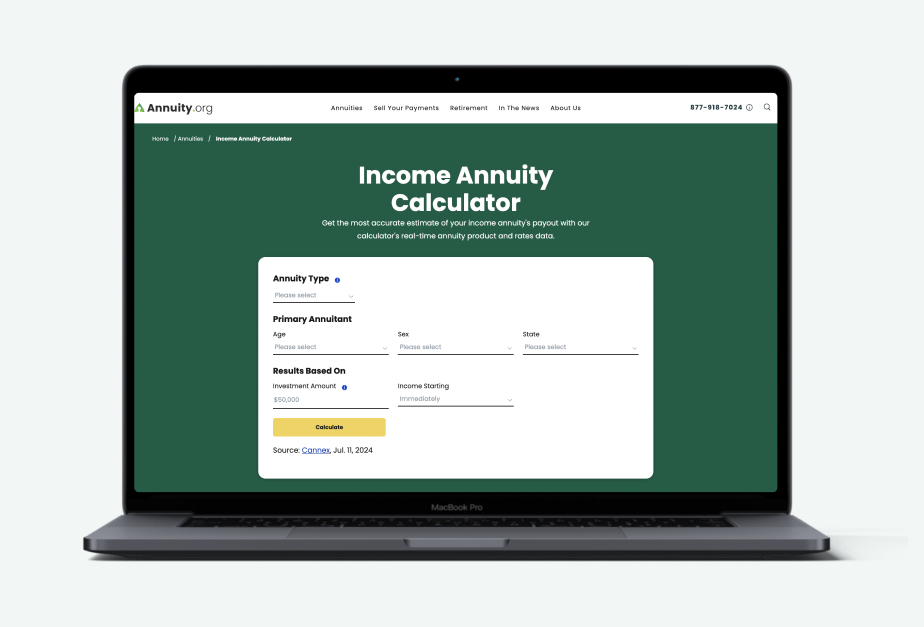
Using a Calculator to Find Your Number
Because annuity payouts depend on age, rates and product type, annuity calculators can help estimate how much income different investment amounts may produce.
Rather than asking “What’s the minimum?”, the better question is: “How much income do I want this annuity to provide?”
There’s no universal amount of money you need to buy an annuity. Some people start with a few thousand dollars, while others invest six figures to create lifetime income. The right amount depends on your goals, age, interest rates and the role the annuity plays in your retirement plan.
When an annuity is sized correctly, it doesn’t just meet a minimum; it delivers peace of mind.

Your Guaranteed Income Is a Few Minutes Away